How to Remove Negative Items From Your Credit Score Profile
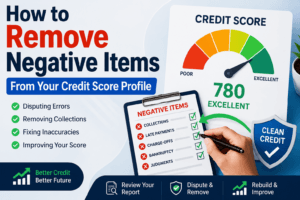
Your credit score plays a major role in your financial life. Whether you’re applying for a mortgage, auto loan, personal loan, or credit card, lenders use your credit history to determine your eligibility and interest rates. Negative items on your credit report can significantly lower your score and make it harder to qualify for favourable financial products.Here in is this guide you will find How to remove negative items from credit report
The good news is that not all negative items have to remain on your credit report forever. In many cases, inaccurate, outdated, or unverifiable information can be removed, helping you improve your credit score over time.
In this guide, we’ll explain how to remove negative items from your credit score profile legally and effectively via Top 5 Credit.
Understanding How to remove negative items from credit report
Before attempting to remove negative information, it’s important to understand what types of items may appear on your credit report.
Common negative items include:
- Late payments
- Collection accounts
- Charge-offs
- Repossessions
- Foreclosures
- Bankruptcies
- Judgements
- Tax liens (older reports)
- High credit utilization
- Defaulted loans
These items can remain on your credit report for several years and impact your credit score differently depending on their severity and age.
Step 1: Obtain Copies of Your Credit Reports
The first step in removing negative items is reviewing your credit reports.
There are three major credit bureaus:
Request copies of your reports and carefully review every account and entry.
Look for:
- Incorrect balances
- Duplicate accounts
- Accounts that don’t belong to you
- Incorrect payment histories
- Outdated information
- Identity theft indicators
Many consumers discover errors that are hurting their scores without realizing it.
Step 2: Identify Errors and Inaccuracies
Credit reporting mistakes are more common than many people think.
Examples include:
- Payments marked late when paid on time
- Wrong account status
- Incorrect account ownership
- Accounts opened fraudulently
- Incorrect personal information
Any inaccurate information can be disputed and potentially removed.
Create a list of every item that appears incorrect and gather supporting documents such as:
- Bank statements
- Payment confirmations
- Account records
- Letters from creditors
Documentation strengthens your dispute.
Step 3: Dispute Negative Items With Credit Bureaus
The Fair Credit Reporting Act (FCRA) gives consumers the right to dispute inaccurate information.Get Credit report copy from Identity Iq and save.
You can file disputes directly with:
- Equifax
- Experian
- TransUnion
When submitting a dispute:
- Clearly identify the account.
- Explain why the information is inaccurate.
- Provide supporting evidence.
- Request investigation and removal.
Credit bureaus generally have 30 days to investigate disputes.
If the bureau cannot verify the information, it must remove or correct the item.
Step 4: Dispute Directly With Creditors
In addition to contacting credit bureaus, you can dispute information directly with the creditor reporting the account.
Send a written dispute requesting verification of:
- Account ownership
- Payment history
- Balance accuracy
- Delinquency dates
If the creditor cannot verify the information, they may stop reporting it or request removal.
This approach often works well for collection accounts and older debts.
Step 5: Request Goodwill Adjustments
If a negative item is accurate but resulted from a temporary hardship, you may request a goodwill adjustment.
A goodwill letter explains:
- Why the late payment occurred
- Steps taken to resolve the issue
- Your positive payment history
- Why you deserve consideration
For example:
- Medical emergency
- Job loss
- Family crisis
- Natural disaster
Some creditors may remove a late payment as a gesture of goodwill, particularly if you have otherwise maintained a strong payment history.
Step 6: Negotiate Pay-for-Delete Agreements
Collection accounts can severely impact credit scores.
In some situations, collection agencies may agree to remove an account from your credit report in exchange for payment.
This arrangement is commonly known as a pay-for-delete agreement.
Before making payment:
- Get the agreement in writing.
- Confirm removal terms.
- Keep copies of all correspondence.
Not all collection agencies offer pay-for-delete agreements, but it is worth asking before settling the debt.
Step 7: Remove Outdated Negative Items
Credit reporting laws limit how long most negative items can remain on your report.
Typical reporting periods include:
- Late payments: 7 years
- Collections: 7 years
- Charge-offs: 7 years
- Foreclosures: 7 years
- Chapter 13 bankruptcy: 7 years
- Chapter 7 bankruptcy: 10 years
If a negative item remains beyond the legal reporting period, dispute it immediately.
Outdated information must be removed.
Step 8: Address Identity Theft Issues
Identity theft can create serious credit damage.
Signs of identity theft include:
- Unknown accounts
- Unauthorized inquiries
- Incorrect addresses
- Debts you never incurred
If you suspect identity theft:
- File a fraud alert.
- Report the theft to authorities.
- Contact affected creditors.
- Dispute fraudulent accounts.
Once verified, fraudulent accounts should be removed from your credit report.
Step 9: Reduce Credit Utilization
Not all negative factors involve errors or collections.
High credit card balances can significantly lower your score.
To improve utilization:
- Pay down balances.
- Keep utilization below 30%.
- Aim for under 10% for optimal scoring.
- Avoid maxing out credit cards.
Lower utilization often produces noticeable score improvements within a few months.
Step 10: Build Positive Credit History
Removing negative items is only part of the process.
You should also focus on building positive credit history.
Effective strategies include:
Make Payments On Time
Payment history is the most important credit scoring factor.
Set reminders or automatic payments to avoid missed due dates.
Maintain Older Accounts
Length of credit history affects your score.
Avoid closing old accounts unless necessary.
Top 5 Credit Repair Companies
Top 5 Credit Repair Companies helps consumers compare the best credit repair services in the United States. We review top-rated companies based on pricing, customer reviews, dispute processes, and results to help you find the best credit repair solution for improving your credit score and financial future.
Diversify Credit Types
A healthy mix may include:
- Credit cards
- Auto loans
- Personal loans
- Mortgages
Responsible management of different credit types can improve your profile.
Limit New Credit Applications
Multiple hard inquiries within a short period can lower your score temporarily.
Apply only when necessary.
Should You Hire a Credit Repair Company?
Many consumers consider hiring professional credit repair services.
Credit repair companies may assist with:
- Credit report reviews
- Dispute preparation
- Creditor communication
- Monitoring services
However, consumers can perform most credit repair activities themselves at no cost.
Before hiring a company:
- Research reviews.
- Verify credentials.
- Understand fees.
- Avoid companies promising guaranteed results.
No company can legally remove accurate and verifiable information from your credit report.
Common Credit Repair Mistakes to Avoid
When attempting to remove negative items, avoid these common mistakes:
Ignoring Credit Reports
Many people never review their reports and miss errors that could be corrected.
Filing Frivolous Disputes
Submitting inaccurate or unsupported disputes can reduce effectiveness.
Closing Old Accounts
Closing long-standing accounts may reduce average account age.
Missing Payments During Credit Repair
Continuing late payments while trying to improve your score can undermine progress.
Falling for Credit Repair Scams
Beware of companies that promise:
- Instant score increases
- Guaranteed deletions
- New credit identities
- Removal of accurate information
These claims are often misleading.
How Long Does Credit Repair Take?
Credit repair timelines vary depending on the complexity of your situation.
Typical time frames include:
- Credit bureau investigations: 30–45 days
- Collection negotiations: Several weeks
- Score improvements: 1–6 months
- Major credit rebuilding: 6–24 months
Consistency and patience are essential.
Our Top 5 Picks Recommendation:
- The Credit Pros – Best for Comprehensive Plans
- Credit Saint – Best for Customized Pricing
- Safeport Law – Best for Legal Support
- The Credit People – Best for Low Setup Fees
- Sky Blue Credit – Best Value
Final Thoughts
Removing negative items from your credit score profile requires persistence, organization, and knowledge of your consumer rights. Start by obtaining your credit reports, identifying inaccuracies, and filing disputes with credit bureaus and creditors when appropriate. Address collection accounts strategically, monitor your reports regularly, and focus on building positive credit habits.
While legitimate negative information may remain for a period of time, inaccurate, outdated, and unverifiable items can often be removed. Combined with responsible financial behavior, these efforts can help improve your credit score and create better opportunities for loans, credit cards, housing, and other financial goals.
By taking a proactive approach to credit repair, you can gradually strengthen your credit profile and achieve long-term financial success.
Read Credit Repair Reviews

About Stephen Joseph:
Stephen is a financial journalist with over a decade of experience covering personal finance, investing, and small business. His work has been widely featured across major outlets including MSN Money, Business Insider, Fox Business, and CBS News MoneyWatch. He currently serves as a financial planning expert and journalist.
In addition to his editorial work, Stephen partners with leading brands in the financial services industry — including Citibank, Discover Bank, and AIG Insurance — helping shape content strategy that connects with real consumers. Before transitioning into financial journalism, He built his professional foundation in sales within the communications industry.
Stephen holds a bachelor’s degree in Political Science from the University of South Carolina and a master’s degree from Charleston Southern University.