How To Improve Credit Score With No Credit History
Credit scores are three-digit numbers that basically reflect how responsible you are with money and paying back debt. They’re generated based on the information in your credit report — which means before you can even have a credit score, you need to have some kind of credit history first.
So what if you have little to no credit history? Can you still improve your score? Absolutely — but it helps to first understand a little bit about how credit scoring actually works.
A credit score is a three-digit number that reflects how responsibly you handle money and pay back what you owe.
- Credit scores are calculated using the information in your credit report, and different scoring models may be used depending on the lender.
- Everyone starts out with a different credit score, though the lowest possible score is 300.
- Some of the fastest ways to build your credit when you have little to no history include becoming an authorized user on someone else’s account, opening a secured credit card, or taking out a small loan in your own name.
Here is Complete Guide How to Improve Credit Score
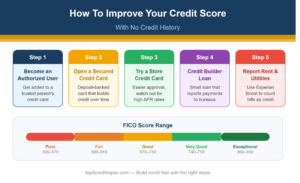
How Credit Scoring Works
Credit scores don’t just appear out of nowhere — they’re calculated using specific scoring formulas. The FICO credit score model is the most widely used, with 90% of top lenders relying on it when making credit decisions. VantageScore is another popular model you’ll come across.
Both models pull from the information in your credit report to calculate your score. Your credit report is basically a detailed record of your financial past, which includes things like:
- The number of credit accounts you have in your name
- Balances and payment history on those accounts
- Any inquiries made when you applied for new credit
- Public records such as judgments, bankruptcies, and foreclosure proceedings
If you have little to no credit history, there simply won’t be much information on your report — and that makes it hard for any scoring model to calculate a score for you. In fact, according to the Consumer Financial Protection Bureau, around 45 million Americans are considered “credit invisibles,” meaning they don’t have enough credit history to generate a score at all.
Having no credit history at all is actually very different from having bad credit. Bad credit means you do have a score — it’s just low because of past financial mistakes. No credit history simply means you haven’t had the chance to build one yet.
Where does your credit score start?
Having no credit history doesn’t mean your score starts at zero. Neither the FICO nor the VantageScore model goes that low — the minimum score on both is 300, while the highest you can reach is 850.
If you have no credit history at all, you likely don’t have a score yet. Once you start building credit, your score may begin around 300 and work its way up from there. So what actually affects your credit score?
It depends on the scoring model, but since FICO is the most widely used by lenders, here’s how it breaks things down:
- Payment History (35%) — This is the biggest factor. Paying on time helps your score, while late payments hurt it.
- Credit Utilization (30%) — This is how much of your available credit limit you’re actually using at any given time.
- Credit Age (15%) — This looks at how long you’ve been using credit. The longer your history, the better.
- Credit Mix (10%) — This considers the variety of credit types you have, such as revolving credit lines or installment loans.
- Credit Inquiries (10%) — Every time you apply for new credit, it triggers a hard inquiry, which can slightly lower your score.
Fastest Ways To Build Credit
Building credit from scratch can feel overwhelming, but there are some solid ways to get started — and some work faster than others. If you’re looking to establish credit quickly, here are some of the best approaches.
Become an Authorized User
Being added as an authorized user means you get charging privileges on someone else’s credit card, but you’re not personally responsible for the debt. It’s one of the easiest ways to start building credit because you’re essentially piggybacking off someone else’s good credit history.
The account shows up on your credit report just like it does on the original cardholder’s. So as long as that person is keeping up good habits — paying on time and keeping the balance low — their positive history reflects on your report too.
Apply for a secured or credit builder card
Secured credit cards are specifically designed for people with bad credit or no credit history at all. They work by requiring a cash deposit upfront, which then becomes your credit limit. As you make purchases, your available credit goes down — and as you make your monthly payments, it opens back up again.
The fastest way to build credit with a secured card is simple — just pay on time, every time. Since payment history makes up the biggest chunk of your FICO score, consistent on-time payments can start moving your score in the right direction within just a few months.
Try a Store Credit Card
Store credit cards work similarly to regular credit cards, but they typically only work at the issuing store and its affiliated brands. The good news is they’re usually easier to get approved for than traditional credit cards, and some even offer rewards on purchases.
The things to watch out for, though, are the APR and the credit limit. Because store cards have lower approval requirements, they tend to come with higher interest rates — so carrying a balance from month to month can get expensive quickly. A low credit limit is also something to be careful about, since it’s easy to max out, which raises your credit utilization ratio and can actually hurt your score.
Get Credit for Rent and Utility Payments
Rent and utility payments don’t automatically factor into your credit score, but there are services that can change that. Experian Boost, for example, is a free tool that reports your utility, phone, and streaming service payments to help raise your score. According to Experian, the average user saw their FICO 8 score go up by 13 points just from using it.
What Is a Good Credit Score?
A good credit score depends on which scoring model you’re looking at. For FICO, a good score falls somewhere between 670 and 739. Anything below that range is considered fair or poor, while anything above it lands in the very good or exceptional category.
What Is a Credit Report?
A credit report is basically a detailed record of your financial history. Creditors report information to the credit bureaus — things like when new accounts were opened, any new credit applications you’ve submitted, your payment history, and your current balances. All of that information is then used to put together your credit report and calculate your credit scores.
What Is the Fastest Way to Increase Your Credit Score?
The quickest ways to boost your credit score include paying your bills on time, becoming an authorized user on someone else’s account, increasing your credit limits without increasing your spending, and paying down existing debt. Just keep in mind that it can take a few months before you start seeing meaningful changes in your score.
The Bottom Line
Building your credit score from scratch isn’t always easy, but the effort is absolutely worth it. The higher your score, the easier it becomes to get approved for loans and lines of credit — and higher scores also mean lower interest rates, which saves you real money over time. Whether it’s opening a secured card, trying a retail card, or becoming an authorized user, there are plenty of ways to start building credit and making progress faster than you might think.

About Stephen Joseph:
Stephen is a financial journalist with over a decade of experience covering personal finance, investing, and small business. His work has been widely featured across major outlets including MSN Money, Business Insider, Fox Business, and CBS News MoneyWatch. He currently serves as a financial planning expert and journalist.
In addition to his editorial work, Stephen partners with leading brands in the financial services industry — including Citibank, Discover Bank, and AIG Insurance — helping shape content strategy that connects with real consumers. Before transitioning into financial journalism, He built his professional foundation in sales within the communications industry.
Stephen holds a bachelor’s degree in Political Science from the University of South Carolina and a master’s degree from Charleston Southern University.