Credit Alert Services : The Complete Guide to Fraud Alerts, Freezes, and Monitoring
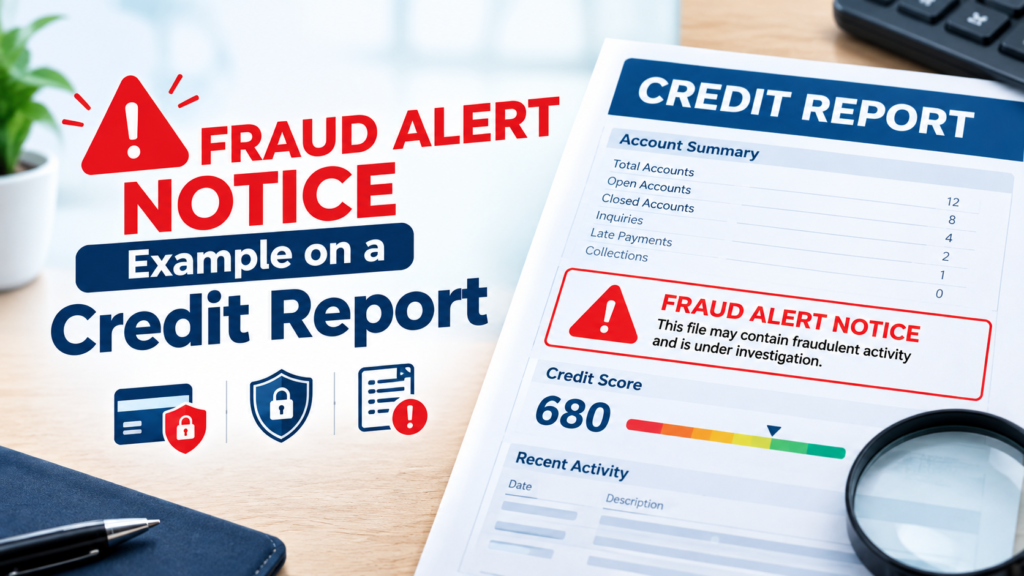
“Credit alert services” is a broad term that covers several different tools — some free and required by federal law, some paid and offered by private companies — that all share one goal: warning you when something changes on your credit file, or blocking access to it entirely. Because these tools get marketed together and often confused with each other, a lot of people either pay for something they’re entitled to for free, or skip a free protection because they think it’s the same as a paid one.
This guide breaks down exactly what each type of credit alert does, what’s free under federal law, what paid monitoring services actually add on top of that, and how to choose the right combination for your situation.
Credit Alert Services : The three legally distinct tools people call:
Under the Fair Credit Reporting Act (FCRA) and its amendments, there are three separate federal protections, and they work differently:
1. Fraud alerts
A fraud alert doesn’t block anyone from seeing your credit report. Instead, it places a notice on your file telling any lender that you may be a victim of fraud, and requires them to take reasonable steps to verify your identity before extending new credit. There are two versions:
- Initial fraud alert — lasts one full year (this was extended from the old 90-day period by a 2018 federal law), available to anyone, no proof of identity theft required.
- Extended fraud alert — lasts seven years, available to confirmed identity theft victims who’ve filed an FTC Identity Theft Report or a police report.
You only need to contact one of the three bureaus (Equifax, Experian, or TransUnion) to place a fraud alert — by law, that bureau must notify the other two.
2. Active duty alerts
A lesser-known cousin of the fraud alert, built specifically for military members. If you’re deployed, you can place a one-year active duty alert on your file, which works like a fraud alert and can be renewed for as long as your deployment continues. This is worth knowing about if you or a family member is serving, since deployment is a common window for identity theft to go unnoticed.
3. Security freezes
This is the strongest protection, and the one most often confused with the others. A security freeze fully blocks new access to your credit report until you lift it, meaning most lenders can’t even view your file to approve new credit in your name. Since September 2018, security freezes have been free by federal law for every consumer, with no expiration date — you control when it goes on and comes off.
Important exceptions: a freeze doesn’t block companies you already have an account with (they can still review your existing account), and it doesn’t block government agencies acting under a court order, child support enforcement, or tax collection.
Credit freeze vs. credit lock: they are not the same thing
Credit bureaus also sell a product called a “credit lock,” often bundled into a paid monitoring subscription, and marketed as faster or more convenient than a freeze. The Consumer Financial Protection Bureau has stated plainly that credit locks are no more effective than security freezes — the difference is that a freeze is a legal right you’re entitled to for free, while a lock is a commercial product governed by the company’s own terms of service, not federal law. If something goes wrong with a lock, your recourse depends on that contract; if something goes wrong with a freeze, you have direct rights under the FCRA.
In short: if a service is charging you monthly for a “credit lock,” you may already be entitled to the free, legally stronger version of the same protection.
What paid credit monitoring services actually add
Fraud alerts and freezes are protective — they don’t tell you when something happens, they make it harder for something bad to happen. Paid monitoring services (and some free versions from the bureaus themselves) add the detection side: they watch your file and notify you of changes. Common features include:
- Alerts when a new account, inquiry, or address is added to your file
- Score tracking over time
- Dark web or “SSN monitoring” scans for your personal information appearing in data breaches
- Identity theft insurance or restoration services to help you recover if fraud does happen
Some of this is genuinely useful, especially dark web monitoring and restoration support if you’ve been through a data breach. Some of it is a paid wrapper around something free — for example, most consumers are already eligible for free credit monitoring and a free score directly from at least one bureau (TransUnion currently offers this), without a subscription.
Common mistakes people make with credit alerts
- Believing a freeze hurts your credit score. It doesn’t. A freeze only restricts who can view your report; it has no effect on your score.
- Forgetting to lift a freeze before applying for credit. Since a freeze blocks new lenders from seeing your file, you’ll need to temporarily lift it (a “thaw”) before a mortgage, car loan, or new credit card application, then can freeze again afterward.
- Paying for a “lock” without knowing a free freeze exists. As covered above, this is one of the most common unnecessary expenses in this space.
- Only alerting one bureau when you mean to freeze your file everywhere. Unlike fraud alerts, security freezes must be placed separately with each of the three bureaus — there’s no single-bureau shortcut for freezes the way there is for fraud alerts.
- Assuming a fraud alert is enough after actual identity theft. If you’ve confirmed you’re a victim, the stronger move is usually a full freeze plus an extended fraud alert, not an initial fraud alert alone.
How to actually place these alerts
All three nationwide bureaus allow you to place a fraud alert or freeze online, by phone, or by mail:
- Equifax — equifax.com/personal/credit-report-services
- Experian — experian.com/freeze
- TransUnion — transunion.com/credit-freeze
Keep the confirmation number or PIN you receive when placing a freeze — you’ll need it to lift or remove the freeze later.
If fraud has already affected your credit, disputes may follow
Placing an alert or freeze protects you going forward, but if a fraudulent account has already appeared on your report, you’ll separately need to dispute it with each bureau to have it removed. If you’d rather have that handled for you — particularly useful if fraud has resulted in multiple inaccurate accounts across your file — a credit repair company can manage the dispute and follow-up process on your behalf:
Browse Credit Monitoring Services
Frequently asked questions
Are credit alert services free?
The core federal protections — fraud alerts, active duty alerts, and security freezes — are all free by law. Paid services add monitoring, dark web scans, or restoration support on top of those free protections.
Does a fraud alert stop all new credit from being opened?
No. It requires lenders to verify your identity before extending credit, but doesn’t block them from viewing your file the way a freeze does.
How long does a security freeze last?
Indefinitely, until you choose to lift or remove it. There’s no expiration date under federal law.
Do I need to freeze my credit with all three bureaus?
Yes, if you want full protection. Unlike a fraud alert, a freeze placed with one bureau doesn’t automatically apply to the other two.
Is a credit freeze the same as a credit lock?
No. A freeze is a free federal right; a lock is a paid commercial product from a bureau. The CFPB has said locks offer no meaningful advantage over the free freeze.
