Authorized User + Credit-Builder Loan: Which Builds Credit Faster?
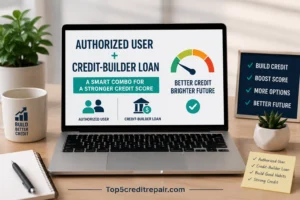
If you are starting from a thin credit file or recovering from past credit trouble, two tools come up again and again as the fastest, lowest-risk ways to build a score: becoming an authorized user and taking out a credit-builder loan. Both work in very different ways, and the combination of an authorized user and credit-builder loan strategy is often more effective than either one used alone, since each tool strengthens a different part of your credit file.
This guide breaks down how each tool actually works, what kind of credit history each one builds, and how to decide whether you need one, the other, or both. By the end, you should have a clear picture of how an authorized user and credit-builder loan approach fits into your specific situation, along with a realistic sense of how long it takes to see results and what pitfalls to avoid along the way.
What Is an Authorized User?
Becoming an authorized user means a family member or close friend adds you to their existing credit card account. You get a card with your name on it, but you are not legally responsible for the debt, the primary cardholder is. Once you are added, the account’s history, including its age, credit limit, and payment record, can begin appearing on your own credit report.
This is one of the fastest ways to gain credit history, because you are essentially borrowing the primary cardholder’s track record rather than building your own from scratch. If that account is old, has a high limit, and has never missed a payment, it can meaningfully raise your score within a single reporting cycle.
The catch is that this approach only works well with the right card and the right person. A card with missed payments or a maxed-out balance can hurt your score just as easily as a clean account can help it, so this piece of an authorized user and credit-builder loan plan depends heavily on trust and timing.
What Is a Credit-Builder Loan?
A credit-builder loan flips the usual borrowing process around. Instead of receiving money upfront and paying it back, you make fixed monthly payments into a locked savings account held by the lender. Once the loan term ends, typically six months to two years, you get access to the funds, often with a small amount of interest.
Throughout the loan, your on-time payments are reported to all three credit bureaus, which builds a payment history entirely on your own, without depending on anyone else’s account. This makes a credit-builder loan a good complement to an authorized user and credit-builder loan strategy, since it adds an installment account to a credit file that might otherwise only contain revolving credit.
Credit unions, community banks, and several online lenders offer these loans, usually starting around $300 to $1,000, with monthly payments as low as $25 to $50. Because the money is locked away until the loan is paid off, there is very little risk of the debt spiraling out of control.
How Each Tool Affects Your Credit Score
Both tools influence your score, but through different mechanisms, which is exactly why combining them tends to work better than relying on just one.
Authorized user status primarily affects your credit age and credit mix, since you inherit an existing account’s history the moment you are added. It can also lower your overall credit utilization if the account has a high limit and low balance, since that ratio factors into your file as well.
A credit-builder loan primarily affects your payment history and credit mix in a different way, by adding an installment loan to a file that may only have revolving accounts like credit cards. It also demonstrates, over time, that you can manage a fixed monthly obligation responsibly, which is something scoring models specifically look for.
Used together, an authorized user and credit-builder loan combination touches nearly every major factor in your credit score: payment history, credit age, credit mix, and utilization, all at once. Very few single credit-building tools cover that much ground on their own, which is part of why this pairing shows up so often in advice from credit counselors and financial educators.
Which One Should You Start With?
If you have access to a trusted family member with an old, well-managed credit card, becoming an authorized user is usually the faster starting point, since the benefit can show up on your report within one billing cycle. It also costs nothing, since you are not opening a new account or making payments yourself.
A credit-builder loan makes more sense if you do not have a family member you can rely on for authorized user status, or if you want to build a credit history that is entirely your own rather than dependent on someone else’s account. It takes longer to show meaningful results, since you need several months of on-time payments before the impact becomes noticeable, but the credit history it builds is fully yours going forward.
For most people, there is no real reason to choose only one. An authorized user and credit-builder loan approach used side by side tends to produce faster, more well-rounded results than picking just one path and waiting.
How to Use Both Together the Right Way
Start by asking a trusted person about authorized user status first, since it is free and can take effect quickly if the right account is available. While you wait for that account to be added and start reporting, apply for a credit-builder loan through a credit union or online lender with no hard credit check, which most credit-builder loan providers offer specifically because they are designed for people with limited credit.
Make every credit-builder loan payment on time and automate it if possible, since a single missed payment defeats the purpose of the loan entirely. At the same time, keep an eye on the authorized user account’s balance and payment activity, since you have no control over how the primary cardholder uses it, but its performance still affects your file.
Within about six months of running an authorized user and credit-builder loan plan together, most people see a noticeably stronger credit file than they would have built with either tool alone, since the payment history from the loan and the account age from the authorized user status reinforce each other.
What to Watch Out For
Not every card or loan is a good fit for this strategy. Before agreeing to be added as an authorized user, ask directly about the account’s payment history and current balance, since a card with recent late payments or a high utilization ratio can drag your score down instead of building it up. It is reasonable to ask to see a recent statement before agreeing, and there is nothing awkward about that request between people who trust each other with this kind of arrangement.
With a credit-builder loan, check for hidden fees, since some lenders charge administrative costs that eat into the savings you are supposed to receive at the end of the term. Look specifically for lenders that report to all three credit bureaus, since a loan that only reports to one or two bureaus limits how much benefit you actually see. Reading the loan agreement closely before signing takes only a few minutes and can save you from an unpleasant surprise later.
It is also worth remembering that neither tool works instantly. An authorized user and credit-builder loan plan needs at least one full billing or payment cycle before any change shows up on your credit report, and it typically needs three to six months of consistent activity before the improvement becomes substantial. Setting realistic expectations from the start makes it far less likely that you will abandon the plan too early, right before the results start to show.
A Realistic Example
Consider two people starting from a thin credit file. One only becomes an authorized user on a parent’s fifteen-year-old credit card with a low balance. The other only opens a $500 credit-builder loan and pays it off over twelve months. Both will likely see their score improve, but each ends up with a different kind of credit file. The first person has strong credit age and a good utilization ratio but no independent payment history of their own. The second person has a solid, self-built payment history but a much younger credit file overall, since the loan itself is new.
A person who does both is building a file with strengths in both categories at once: the age and utilization boost from the authorized user account, and the independent payment history and credit mix benefit from the loan. This is why lenders and credit counselors often recommend combining the two rather than treating them as competing options.
How This Fits Into a Broader Credit-Building Plan
Neither an authorized user account nor a credit-builder loan should be the only thing you rely on long term. Once you have a few months of positive activity from both, consider adding a secured credit card in your own name, since it adds another independent revolving account and, over time, can graduate into a standard unsecured card. The goal is to eventually have a credit file that stands on its own, even if it started with help from someone else’s account.
It also helps to check your credit reports periodically during this process, since errors on a report can quietly undercut the progress you are making. Pull your free reports from all three bureaus, Experian, TransUnion, and Equifax, and dispute anything that looks inaccurate, including accounts you do not recognize or payment statuses that do not match your records.
Alternatives Worth Considering
If neither option is available to you right now, a secured credit card is the next best alternative. You put down a refundable deposit that becomes your credit limit, and your payment activity is reported just like a regular credit card. It takes a bit longer to show results than authorized user status, but it does not require anyone else’s cooperation.
Some banks and fintech apps also offer their own credit-building products that report rent payments or everyday debit card spending to the credit bureaus. These tend to have a smaller impact than a well-managed authorized user account or a credit-builder loan, but they can be a reasonable supplement if you already have both of the main tools in place and want to add more positive data to your file.
Frequently Asked Questions
Is an authorized user and credit-builder loan strategy better than just one of the two?
Yes, in most cases. Each tool affects different parts of your credit score, so using them together tends to build a stronger, more well-rounded credit file than relying on either one by itself.
How fast does an authorized user and credit-builder loan combination improve my score?
Authorized user status can show up within a single billing cycle if the account reports quickly, while a credit-builder loan typically needs three to six months of on-time payments before its impact becomes noticeable.
Do I need good credit myself to become an authorized user?
No. Authorized user status does not require a credit check on you at all. The card issuer only evaluates the primary cardholder’s account, which is why it is such an accessible option for people with little or no credit history.
Will a credit-builder loan require a hard credit check?
Most credit-builder loans use a soft credit check or none at all, since they are specifically designed for people building or rebuilding credit. It is worth confirming this with the lender before applying, since policies vary.
Can being an authorized user hurt my credit score?
Yes, if the primary cardholder has a history of missed payments or carries a high balance relative to the card’s limit. Only agree to authorized user status on an account you know has a clean payment history and low utilization.
How much does a credit-builder loan typically cost?
Most credit-builder loans range from $300 to $1,000, with monthly payments between $25 and $50. Some lenders charge a small administrative fee, so it is worth comparing a few options before choosing one.
Should I remove myself as an authorized user once my credit improves?
Not necessarily. As long as the account stays in good standing, keeping the authorized user status continues to benefit your credit age and history. Only consider removing it if the primary cardholder’s account starts showing missed payments or high balances.

About Stephen Joseph:
Stephen is a financial journalist with over a decade of experience covering personal finance, investing, and small business. His work has been widely featured across major outlets including MSN Money, Business Insider, Fox Business, and CBS News MoneyWatch. He currently serves as a financial planning expert and journalist.
In addition to his editorial work, Stephen partners with leading brands in the financial services industry — including Citibank, Discover Bank, and AIG Insurance — helping shape content strategy that connects with real consumers. Before transitioning into financial journalism, He built his professional foundation in sales within the communications industry.
Stephen holds a bachelor’s degree in Political Science from the University of South Carolina and a master’s degree from Charleston Southern University.