How to Check Your Credit Report: A Complete Step-by-Step Guide
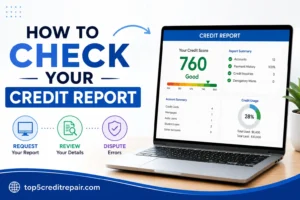
Most people know that having a good credit score matters. But far fewer actually take the time to look at their credit report — the detailed document that your score is built from. That’s a mistake that can cost you.
Your credit report affects whether you get approved for a mortgage, a car loan, a credit card, or even a rental apartment. It can influence the interest rate you’re offered and, in some states, even whether you get a job offer. Yet millions of Americans have never checked theirs even once.
The good news is that checking your credit report is completely free, takes less than 15 minutes, and can be done from your phone or computer. This guide walks you through the entire process — step by step — so you know exactly what to do, what to look for, and what to do if something looks wrong.
What Is a Credit Report?
Before jumping into the how-to, it helps to understand what a credit report actually is.
A credit report is a detailed record of your credit history, compiled by one of the three major credit bureaus — Equifax, Experian, and TransUnion. Lenders, landlords, and other creditors send information about your accounts to these bureaus, which organize it into a formal report.
Your credit report is NOT the same as your credit score. Think of it this way: your credit report is the full story, and your credit score is the summary. The score is a three-digit number generated from the information inside your report.
Your credit report typically includes:
- Personal identifying information (name, address, date of birth, Social Security number)
- A list of all your credit accounts (credit cards, loans, mortgages)
- Payment history on each account
- Current balances and credit limits
- Public records (bankruptcies, court judgments, tax liens)
- A list of recent inquiries into your credit
Each of the three bureaus maintains a separate report, and they don’t always contain the same information — which is why it’s important to check all three.
Why Checking Your Credit Report Matters
People often wait until they’re about to apply for a loan to think about their credit — and that’s too late to fix any problems. Here’s why reviewing your report regularly is important:
Catching Errors: Credit report errors are surprisingly common. A misspelled name, an account that isn’t yours, or a payment incorrectly marked as late can drag your score down without you even knowing it. The only way to catch these is to look.
Detecting Identity Theft: If someone has opened accounts in your name, those accounts will show up on your credit report. Early detection can prevent serious long-term financial damage.
Understanding Your Financial Standing: Knowing what’s on your report helps you understand where you stand financially and what steps you can take to improve your credit profile.
Preparing for Major Purchases: If you’re planning to buy a home or a car in the next year, reviewing your credit report well in advance gives you time to clean up any issues before a lender sees them.
Step 1: Go to the Right Place — AnnualCreditReport.com
The only federally authorized website for free credit reports is Identity Iq. This site was created under the Fair and Accurate Credit Transactions Act (FACTA), which requires each of the three major credit bureaus to provide every American with at least one free credit report per year.
Be careful: there are many websites with similar-sounding names that charge fees or try to sign you up for paid monitoring services. The only legitimate free source mandated by federal law is AnnualCreditReport.com.
You can also request your reports by:
- Phone: Calling 1-877-322-8228
- Mail: Filling out the Annual Credit Report Request Form and mailing it to Annual Credit Report Request Service, P.O. Box 105281, Atlanta, GA 30348-5281
For most people, the online method is the fastest and easiest.
Step 2: Create or Access Your Account
When you visit AnnualCreditReport.com, you’ll be prompted to provide some basic personal information to verify your identity. This includes:
- Your full legal name
- Current address (and previous address if you’ve moved in the last two years)
- Date of birth
- Social Security number
This information is used solely to verify who you are and pull the correct report. The site uses secure encryption, and requesting your own report does not affect your credit score in any way. (This is called a “soft inquiry.”)
If you request your reports online, you’ll typically be able to view them immediately. If you request by phone or mail, you’ll receive them within 15 days.
Step 3: Choose Which Reports to Request
You have three separate credit reports — one from each bureau. You can request all three at once, or stagger them throughout the year.
Option A — Request All Three at Once This gives you a complete snapshot of your credit picture right now. It’s the best option if you’ve never checked before, if you’re about to apply for a major loan, or if you suspect identity theft.
Option B — Stagger Them Throughout the Year Request one bureau’s report every four months (Equifax in January, TransUnion in May, Experian in September, for example). This approach lets you monitor your credit year-round without paying for a monitoring service.
For most first-timers, requesting all three at once is recommended so you can compare them and spot any discrepancies.
Step 4: Verify Your Identity
The credit bureaus use security questions to confirm you are who you say you are. These questions are based on information already associated with your credit file — things like:
- The name of a lender you’ve previously borrowed from
- A previous address you lived at
- The approximate monthly payment on a specific loan
- A car you once financed
Answer these carefully and honestly. If you fail the identity verification online, you’ll be directed to request your report by mail instead — which is a slower process but still completely free.
Step 5: Download and Save Your Reports
Once your identity is verified, you’ll be able to view and download your credit report as a PDF. Do this immediately — the online viewing window may expire after a session.
Save each report with a clear filename (for example: “Equifax_Report_June2026.pdf”) and store them somewhere safe — a secure folder on your computer, a cloud storage account, or a printed copy in a locked file.
You’ll want to refer back to these later as you review them and potentially dispute any errors.
Step 6: Read Your Credit Report — Section by Section
Now comes the most important part: actually reading your report. A credit report can look overwhelming at first — it may be 20 to 30 pages long — but it follows a predictable structure. Here’s how to break it down.
Section 1: Personal Information
This section lists your name, current and past addresses, date of birth, Social Security number, and employment information.
What to look for:
- Make sure your name is spelled correctly
- Confirm all listed addresses are places you’ve actually lived
- Check that your Social Security number is accurate
Errors in personal information won’t directly affect your score but can indicate identity theft or mixed files (where your file gets confused with someone else’s).
Section 2: Account Information (Trade Lines)
This is the largest and most important section. It lists every credit account you have or have had — credit cards, car loans, student loans, mortgages, personal loans, and more.
For each account, you’ll see:
- The name of the creditor
- The type of account (revolving credit, installment loan, etc.)
- The date the account was opened
- The credit limit or loan amount
- The current balance
- Payment status (current, 30 days late, 60 days late, etc.)
- Payment history, often shown month by month
What to look for:
- Accounts you don’t recognize (possible fraud or identity theft)
- Payments marked as late that you made on time
- Incorrect balances or credit limits
- Accounts listed as open that you’ve closed
- Duplicate accounts listed more than once
This section requires the most careful attention. Go through every single account line by line.
Section 3: Public Records
This section lists serious financial events that are part of the public record, such as:
- Bankruptcies (Chapter 7 or Chapter 13)
- Civil court judgments
- Tax liens (though most tax liens were removed from credit reports in recent years)
What to look for:
- Any public record that isn’t yours
- Bankruptcies that should have expired (Chapter 7 stays for 10 years; Chapter 13 stays for 7 years)
Section 4: Hard Inquiries
When you apply for credit, the lender checks your credit report. This is recorded as a hard inquiry and temporarily lowers your score by a few points.
This section lists all hard inquiries from the past two years.
What to look for:
- Inquiries from lenders you never applied to (could indicate someone is trying to open accounts in your name)
- Inquiries that seem duplicated or incorrect
Note: Your own credit checks (soft inquiries) do NOT appear in this section and do not affect your score.
Step 7: Compare All Three Reports
Since each bureau maintains its own report, information can vary between them. One bureau may show a late payment that another doesn’t. An account might appear on two reports but not the third.
Go through each report systematically and note:
- Any accounts that appear on one report but not others
- Balances or payment statuses that differ between reports
- Hard inquiries that appear on one bureau’s report but not the others
These discrepancies aren’t always signs of fraud — sometimes creditors simply report to only one or two bureaus. But unusual differences are worth investigating.
Step 8: Dispute Any Errors You Find
If you find inaccurate information on your credit report, you have the legal right to dispute it under the Fair Credit Reporting Act (FCRA). Here’s how:
Online Dispute: Each bureau has an online dispute portal:
- Equifax: equifax.com/personal/credit-report-services
- Experian: experian.com/disputes
- TransUnion: transunion.com/credit-disputes
By Mail: Write a dispute letter that clearly explains each error, include copies of supporting documents, and send it by certified mail so you have proof of delivery.
What Happens Next: The credit bureau must investigate your dispute within 30 days. They’ll contact the creditor who reported the information. If the creditor can’t verify the information or it’s found to be incorrect, it must be corrected or removed from your report.
Keep records of every dispute you file — confirmation numbers, dates, and any responses you receive.
Step 9: Set Up a Regular Review Schedule
Checking your credit report once is a great start, but making it a habit is even better. Here’s a simple schedule to follow:
- Every 4 months: Pull one bureau’s free report (rotating among the three)
- Before any major loan application: Pull all three reports at least 3–6 months in advance
- Immediately if you suspect fraud: Request all three reports right away and consider placing a fraud alert or credit freeze
You can also use free credit monitoring tools — many banks and credit card issuers now offer free score tracking and alerts through their apps or websites.
Step 10: Take Action Based on What You Find
Reviewing your credit report isn’t just a passive exercise. Use what you learn to take meaningful steps:
- If you find errors, dispute them immediately
- If you see high balances, start a plan to pay them down
- If you notice missed payments in your history, commit to autopay going forward
- If you spot suspicious accounts, contact the bureau and the creditor immediately and consider placing a fraud alert
Your credit report is a financial mirror. It shows you exactly where you stand — and exactly what to work on.
Frequently Asked Questions (FAQ)
Is it really free to check my credit report?
Yes, completely free. Under federal law, you’re entitled to one free credit report from each of the three major bureaus every 12 months through Identity Iq. During and after the COVID-19 pandemic, free weekly access was extended and has remained available through a number of programs. You’ll never need to pay to see your basic credit report from the official source.
Will checking my credit report hurt my credit score?
No. When you check your own credit report, it’s recorded as a “soft inquiry,” which has absolutely no impact on your credit score. Only “hard inquiries” — which happen when a lender checks your credit as part of a loan or credit card application — can temporarily lower your score. You can check your own report as often as you like without any negative effect.
How often should I check my credit report?
At a minimum, once a year. A better approach is to check one bureau’s report every four months, rotating between Equifax, TransUnion, and Experian. If you’re planning to apply for a mortgage or major loan, check all three reports at least three to six months beforehand so you have time to address any issues.
What if I find an account on my report that I don’t recognize?
Don’t ignore it. An unknown account could mean identity theft or a mixed credit file (where your report contains information belonging to someone else with a similar name or Social Security number). Immediately dispute the account with the credit bureau, contact the creditor listed, and consider placing a free fraud alert with all three bureaus.
How long does negative information stay on my credit report?
Most negative items — late payments, collections, charge-offs — remain on your report for seven years from the date of the original delinquency. Chapter 7 bankruptcy stays for 10 years, while Chapter 13 bankruptcy stays for 7 years. Hard inquiries remain for 2 years but typically only affect your score for 12 months.
What is the difference between a credit report and a credit score?
Your credit report is the full, detailed history of your credit activity — every account, payment, balance, and inquiry. Your credit score is a three-digit number (typically 300–850 using the FICO model) calculated from the information in your credit report. You can check your credit report for free at AnnualCreditReport.com, while your credit score may require a separate service — though many banks and credit card companies now offer it for free.
Can I dispute errors on my credit report myself, or do I need a professional?
You can absolutely do it yourself — and it’s free. The dispute process is straightforward, and you have the same legal rights as any paid credit repair company. In fact, no legitimate credit repair company can do anything for you that you can’t do yourself. Be cautious of companies that charge large fees and promise to remove all negative items, including accurate ones — that’s not legally possible.
What is a credit freeze, and should I get one?
A credit freeze (also called a security freeze) prevents new creditors from accessing your credit report, making it nearly impossible for identity thieves to open new accounts in your name. You can freeze your report with each bureau for free. It doesn’t affect your existing accounts or your ability to check your own report. If you’ve been a victim of identity theft or want maximum protection, a credit freeze is a smart move.
Why are my three credit reports different from each other?
Not all creditors report to all three bureaus. Some lenders report to only one or two, which means an account might appear on your Equifax report but not your TransUnion report. Additionally, the timing of when information is updated can differ. This is why it’s important to review all three reports rather than assuming they all contain the same information.
What should I do if I’m denied credit based on my credit report?
Under federal law, if you’re denied credit, insurance, or employment based on information in your credit report, the company must notify you and tell you which bureau provided the report. You then have 60 days to request a free copy of that specific report. Review it to understand why you were denied, dispute any errors you find, and take steps to address legitimate negative items over time.
Final Thoughts
Checking your credit report is one of the most valuable financial habits you can build — and it costs nothing. It takes less than 20 minutes to pull all three reports, review them, and note anything that needs attention.
Think of it like an annual health checkup, but for your finances. The information in your credit report directly shapes your ability to borrow money, rent a home, and in some cases, get hired. Staying on top of it means fewer surprises and more control over your financial life.
Start today. Visit AnnualCreditReport.com, pull your reports, read through them carefully, and take action on anything that doesn’t look right. Your future financial self will be glad you did.

About Stephen Joseph:
Stephen is a financial journalist with over a decade of experience covering personal finance, investing, and small business. His work has been widely featured across major outlets including MSN Money, Business Insider, Fox Business, and CBS News MoneyWatch. He currently serves as a financial planning expert and journalist.
In addition to his editorial work, Stephen partners with leading brands in the financial services industry — including Citibank, Discover Bank, and AIG Insurance — helping shape content strategy that connects with real consumers. Before transitioning into financial journalism, He built his professional foundation in sales within the communications industry.
Stephen holds a bachelor’s degree in Political Science from the University of South Carolina and a master’s degree from Charleston Southern University.